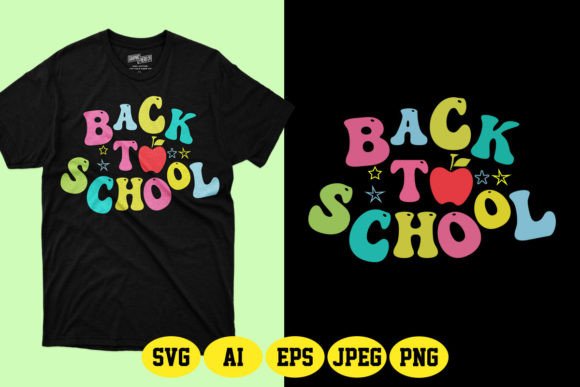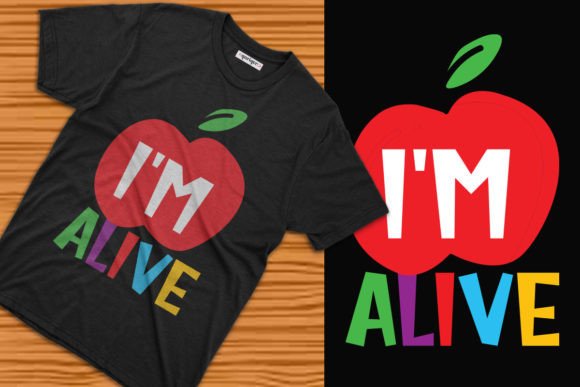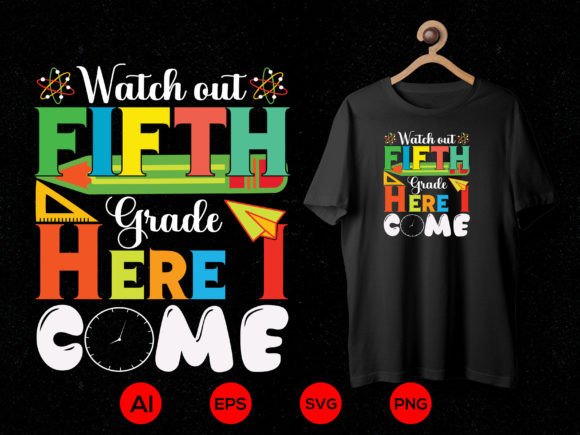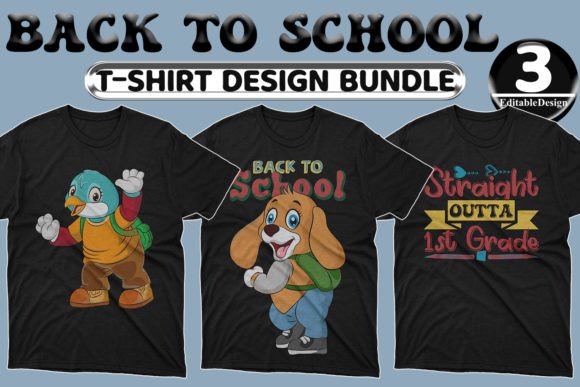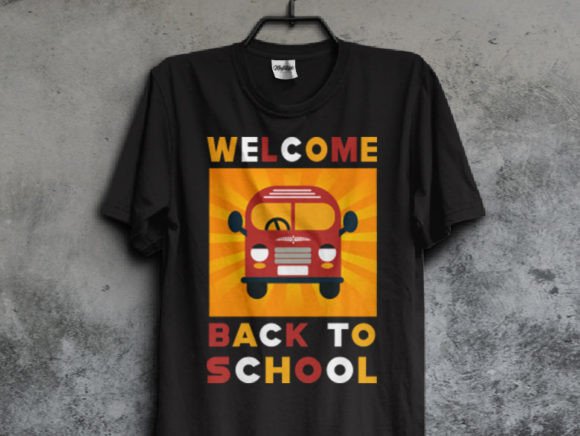
Back to School T-Shirt Design for Print
Whether you're launching a school spirit campaign, supporting a PTA fundraiser, or creating merch for a tutoring business, having a polished, production-ready Back to School T-Shirt Design for Print saves hours of design iteration—and avoids last-minute print surprises. This isn’t just another clipart bundle. It’s a purpose-built, professional-grade asset: 100 vector shapes, fully re-sizable without pixelation, with every element individually color-changeable in Adobe Illustrator or compatible software.
Why Vector Matters—Especially for School Season
School-related printing spans formats: small youth tees (XS–L), oversized crewnecks for teachers, tote bags for open houses, and even vinyl decals for classroom doors. A raster file—even at 300 dpi—loses clarity when scaled beyond its original dimensions. But this Back to School T-Shirt Design for Print is built entirely in vector. That means you can stretch the backpack icon to fit a toddler’s onesie or blow up the graduation cap motif across a banner—no blurring, no jagged edges, no redesign needed.
For educators coordinating spirit week, this flexibility lets one design serve multiple grade levels and garment types. For print-on-demand sellers, it eliminates the need to commission separate files for each size tier—cutting prep time by up to 70% compared to editing raster mockups manually.
Color Control That Scales With Your Needs
“100 color-changeable” isn’t marketing shorthand—it reflects how the file is structured: each shape, text block, and icon is on its own layer or grouped logically, with global swatches pre-assigned. You’re not stuck with preset palettes. Swap the chalkboard background from slate gray to school-branded navy in two clicks. Change the apple icon from red to gold for honor roll recognition—or shift the entire palette to high-contrast yellow/black for students with visual processing needs.
This level of control supports real-world use cases: a district communications team aligning designs with updated brand guidelines; a freelance designer delivering client-approved variations within an hour; or a homeschool co-op customizing colors per grade-level cohort—all without touching the underlying geometry or layout.
A Truly Unique Design—Not Just Another Template
Unlike generic “school” vectors that recycle the same pencil-and-book combo, this Back to School T-Shirt Design for Print features 100 distinct, thoughtfully composed elements: geometric locker combinations, stylized notebook margins, minimalist bus silhouettes, abstract textbook stacks, and clean typography treatments. Each shape is original—not traced, not auto-traced, and not pulled from stock libraries.
That uniqueness matters when differentiation is key. A small tutoring studio using this design on staff shirts stands out against competitors relying on overused clipart. A university bookstore selling faculty apparel avoids copyright concerns tied to licensed mascots while still evoking academic energy. And because all 100 shapes are editable and combinable, you’re not limited to one composition—you can build new layouts from scratch using trusted, consistent assets.
Print-Ready—Without the Guesswork
“Print ready” here means more than just hitting 300 dpi. The AI and EPS source files include proper bleed setup (0.125″), outlined fonts, CMYK color mode, and embedded ICC profiles—no hidden RGB layers or missing typefaces. There’s no need to hire a prepress specialist to fix trapping or overprint settings before sending to your screen printer or DTG provider.
This reliability reduces risk. A PTA volunteer ordering 200 shirts for a fall carnival won’t discover misaligned halftones after delivery. A small-batch apparel brand avoids costly reprints due to unembedded fonts or incorrect color spaces. Even if you’re new to commercial printing, the file structure guides you: layers are labeled clearly (“Main Icon,” “Background Fill,” “Text Outline”), and non-printing guides are locked and hidden by default.
Who Benefits Most—and Why
This Back to School T-Shirt Design for Print delivers highest ROI for three groups:
- Educators and school staff: Who need fast, brand-aligned visuals for spirit days, orientation kits, or classroom incentives—without design software expertise. The clean, modern aesthetic reads as professional, not childish, supporting credibility with parents and administrators.
- Freelance designers and small agencies: Who juggle tight deadlines for multiple education clients. Having a vetted, production-safe base file means less time troubleshooting exports and more time refining messaging or strategy.
- Small business owners in learning-adjacent niches: Think test prep centers, after-school coding clubs, or Montessori supply shops. They gain a cohesive visual language across merchandise, social media, and signage—without licensing fees or restrictive usage terms.
Realistic Considerations—Not Just Features
While versatile, this design works best when matched to appropriate contexts. It’s optimized for screen printing, direct-to-garment, and high-resolution digital printing—but not for embroidery or low-res heat transfers where fine vector details may not translate. If you’re producing sublimation mugs or phone cases, confirm your vendor accepts AI/EPS files and supports vector-based RIP workflows.
Also, “100 unique shapes” refers to individual graphic components—not 100 full shirt layouts. You’ll still need to compose final artwork. But unlike starting from zero, you’re assembling with precision-engineered, stylistically unified pieces. Think of it as a curated design toolkit, not a finished product.
How to Use It Effectively
Start by auditing your output needs: Will you print on light or dark garments? Do you need matching stickers or newsletter banners? Open the AI file, duplicate the “Base Layout” artboard, then lock unused layers. Adjust colors using the Swatches panel—not the Color Picker—to preserve consistency across variants. Export PDF/X-4 for printers; save PNGs at 300 dpi only for web previews (never final print).
For educators: Pair the notebook motif with handwritten-style fonts for student welcome kits. For entrepreneurs: Combine the bus icon with a subtle gradient overlay to imply forward motion—ideal for growth-focused coaching brands. And always proof color output on a physical swatch before bulk runs, especially with metallic or neon inks.
Final Thought: Quality Infrastructure Enables Better Outcomes
A great Back to School T-Shirt Design for Print doesn’t just look good—it removes friction. It turns what could be a three-day design-and-approval loop into a focused, confident 90-minute session. It lets teachers focus on lesson plans instead of resizing logos. It helps small businesses communicate professionalism without hiring a full-time designer. And it gives creators room to adapt—not just replicate—because every shape, color, and dimension is intentionally accessible, not locked down.
When school season arrives, preparation isn’t about doing more. It’s about having the right tools—clean, modern, precise, and human-centered—so what you make reflects the care and clarity your audience deserves.