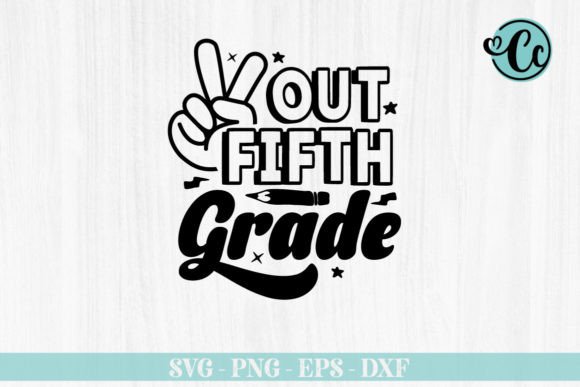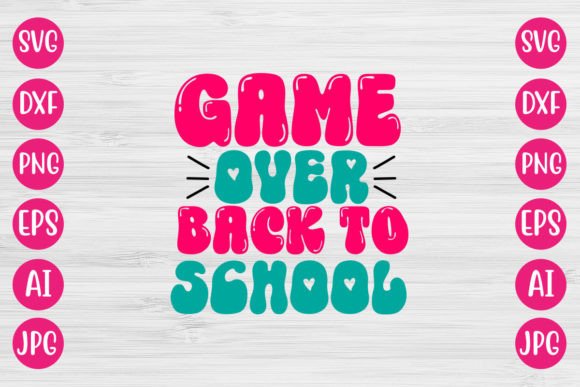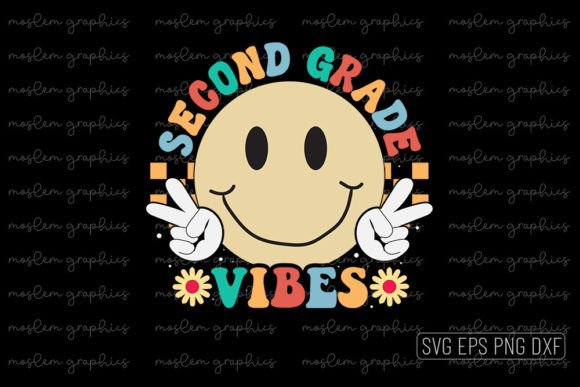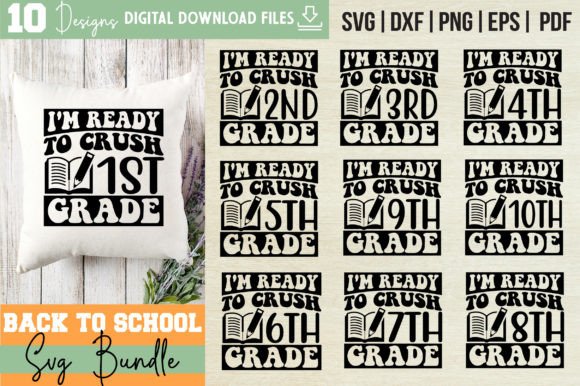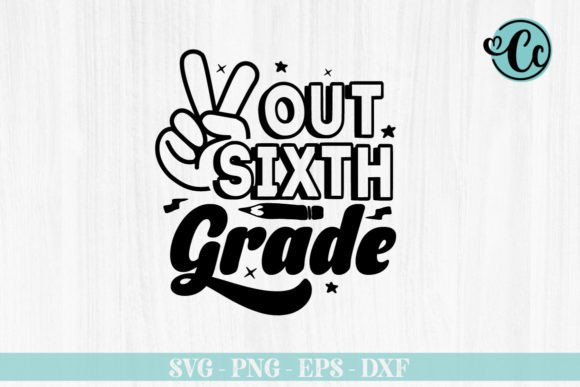
Out Sixth Grade SVG, Back to School SVG: What You Actually Need to Know Before Downloading
Whether you're designing custom teacher appreciation shirts, prepping a classroom welcome sign, or launching a small Etsy shop for school-themed apparel, Out Sixth Grade SVG, Back to School SVG files are popular—and for good reason. These vector designs combine playful, hand-lettered charm with real-world versatility: they scale cleanly for T-shirts, mugs, stickers, banners, and more. But popularity doesn’t equal simplicity—and many users unknowingly run into avoidable roadblocks after purchase. Let’s cut through the confusion with practical, experience-based guidance.
What This SVG Bundle Really Offers (and What It Doesn’t)
At its core, this collection includes editable vector files—SVG, EPS, DXF, and high-resolution PNG (300 DPI)—designed specifically around sixth-grade milestones and back-to-school energy. The “Hello School” and “Teacher” variations add flexibility for educators, parents, and small business owners. Because they’re vector-based, you *can* resize them without pixelation, recolor them in design software, layer text, or adapt layouts for different products.
But here’s where assumptions trip people up: “Editable” doesn’t mean “no setup required.” Many expect plug-and-play results in Cricut Design Space or Silhouette Studio—only to discover their chosen file format isn’t fully compatible with their machine or software version. Others assume all included formats behave identically, when in fact DXF handles line cuts better for vinyl, while SVG preserves layers and transparency for digital printing.
1. Skipping the Format Compatibility Check
Not every cutting machine or design platform reads every file type equally well. For example, older versions of Silhouette Studio may not render layered SVGs correctly, while some basic Cricut accounts limit EPS uploads. Instead of guessing, open your preferred software *before downloading*, then verify which formats it supports natively—and whether you’ll need to convert or simplify layers.
Better approach: Start with the SVG file if you’re using Cricut or newer design tools—it’s widely supported and retains color and grouping. Use DXF only if you’re cutting single-layer vinyl or heat transfer with precise outline paths. Save EPS for professional print shops or Adobe Illustrator workflows.
2. Assuming “High-Resolution PNG” Means Print-Ready for All Uses
The included 300 DPI PNG is excellent for mockups, website banners, or simple iron-on transfers—but it’s raster, not vector. That means resizing beyond its original dimensions will blur edges. Some users mistakenly use it for large-format signs or embroidery digitizing, expecting crisp results. The outcome? Fuzzy text on a 24" banner or misaligned stitching on a custom hoodie.
Better approach: Reserve PNGs for digital displays, social media, or small-scale prints (like 4×6 stickers). For anything larger than 12", go straight to the SVG or EPS and scale *within vector software*. If you’re sending files to a local print shop, ask first whether they prefer SVG, EPS, or PDF—and confirm they’ll handle fonts and outlines properly.
3. Overlooking Licensing Scope—Especially for Sellers
This bundle is marketed for personal and small business use, but terms vary by seller. Some listings allow unlimited physical product sales (e.g., shirts sold on your Shopify store), while others restrict commercial use unless you purchase an extended license. Users who skip reading the license details risk takedowns, disputes, or rework later—especially if they’ve already printed 50 shirts for a PTA fundraiser.
Better approach: Open the listing’s license section *before checkout*. Look for clear language about physical product rights, attribution requirements, and limitations on digital redistribution (e.g., reselling the SVG itself). When in doubt, message the seller directly—reputable creators respond quickly and clarify boundaries.
What to Verify Before You Download—or Buy
Before clicking “add to cart,” take two minutes to check these five points:
- File list clarity: Does the description explicitly name each included format (SVG, PNG, EPS, DXF) and note their intended uses? Vague phrasing like “multiple formats included” invites uncertainty.
- Design integrity: Zoom in on preview images. Are letters evenly spaced? Do “sixth grade” and “hello school” elements align visually? Poor kerning or inconsistent stroke weights become glaring on fabric or signage.
- Software readiness: Are layers grouped logically? Are fonts outlined (converted to shapes)? Unoutlined text won’t display correctly on machines that don’t have the same font installed.
- Color handling: Is the design built with solid fills—or gradients/transparencies that may not translate to vinyl cutting or screen printing? Simpler, flat-color vectors tend to be more reliable across production methods.
- Support responsiveness: Does the seller offer post-purchase help? A quick test message (“Hi, do these work with Cricut Joy?”) reveals responsiveness—and often uncovers helpful tips not in the listing.
Realistic Expectations for Real Results
You don’t need advanced graphic design skills to use Out Sixth Grade SVG, Back to School SVG effectively—but you do benefit from knowing what’s under the hood. Think of these files like quality ingredients: they give you great raw material, but how you prep, combine, and apply them determines the final outcome. A well-chosen SVG file saves hours over recreating lettering from scratch. But skipping compatibility checks or misreading licensing can cost time, money, or credibility—especially if you’re building trust with parents, students, or customers.
For educators printing classroom signs: start with the SVG, ungroup elements in your software, adjust spacing for readability at 18”, and export as PDF for your school printer. For small biz owners making kids’ tees: test one design on a sample shirt first—check how the “hand-lettered” texture holds up after washing, and whether the size scales appropriately for age ranges (e.g., a “Sixth Grade” shirt for a 12-year-old looks different on a toddler-sized blank).
Ultimately, the value isn’t just in the files—it’s in using them thoughtfully. When you match format to function, respect licensing, and preview before producing, you turn a simple download into something meaningful: a confident first-day shirt, a proud graduation keepsake, or a small business that grows because its designs look polished, intentional, and authentically school-ready.