Back to School, Shop Now Sale Banner Des: A Strategic Creative Asset for Modern Marketers
For professionals across marketing, design, education-adjacent commerce, and small business operations, the Back to School, Shop Now Sale Banner Des is more than a seasonal graphic—it’s a tightly calibrated communication tool that bridges emotional resonance with conversion intent. Unlike generic promotional templates, this banner concept integrates smart cartoon emotions and a chalkboard aesthetic to signal authenticity, approachability, and pedagogical warmth—while driving immediate action through its “Shop Now” directive. Its growing adoption reflects deeper shifts in how B2C and hybrid brands engage time-sensitive, values-aware audiences during one of retail’s most competitive annual windows.
What Is Back to School, Shop Now Sale Banner Des—Really?
The term Back to School, Shop Now Sale Banner Des refers not just to a visual layout but to a designed narrative system: a banner whose description (or “des”) informs both its visual execution and strategic deployment. It’s built around three interlocking elements:
- Contextual framing: “Back to School” anchors it in a shared cultural rhythm—returning routines, preparation energy, and collective anticipation—not just academic calendars, but household transitions, supply list planning, and back-to-campus readiness.
- Behavioral clarity: “Shop Now” functions as a micro-call-to-action grounded in urgency and low-friction decision-making. It avoids vague verbs like “Explore” or “Discover,” opting instead for immediacy aligned with short attention spans and cart abandonment psychology.
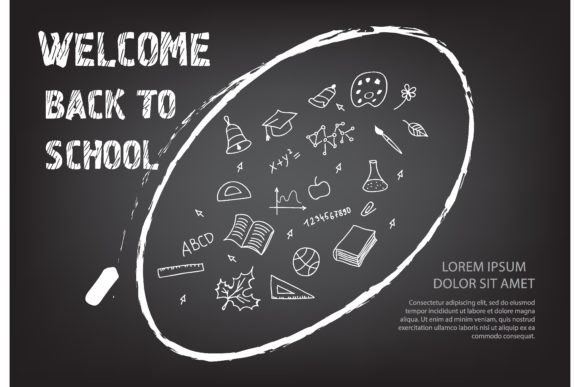
- Emotional texture: The “smart cartoon emotions” layer introduces expressive, hand-drawn characters—think a wide-eyed notebook-wielding owl, a grinning backpack with arms, or a chalk-dusted pencil winking—each conveying enthusiasm, confidence, or gentle encouragement without infantilization. Paired with a textured chalkboard background (subtle grain, soft shadow, faint grid lines), it evokes classroom authenticity while remaining digitally crisp and scalable.
This isn’t clipart repackaged. It’s intentional semiotics: every line weight, color temperature (warm ochres, slate blues, creamy off-whites), and character gesture serves dual purposes—brand alignment and cognitive ease.
Why This Design Resonates Now—Beyond Seasonal Cycles
Marketers aren’t choosing chalkboard-and-cartoon banners because they’re “cute.” They’re choosing them because they align with three converging trends:
- The Rise of Human-Centered Visual Language: As AI-generated imagery floods feeds, audiences subconsciously reward assets that signal human authorship—imperfections, tactile textures, and contextual storytelling. A chalkboard background doesn’t just say “school”—it says “handmade,” “thoughtful,” “ready for real people.” For freelancers designing for edtech startups or stationery brands, this aesthetic builds trust faster than sterile vector graphics.
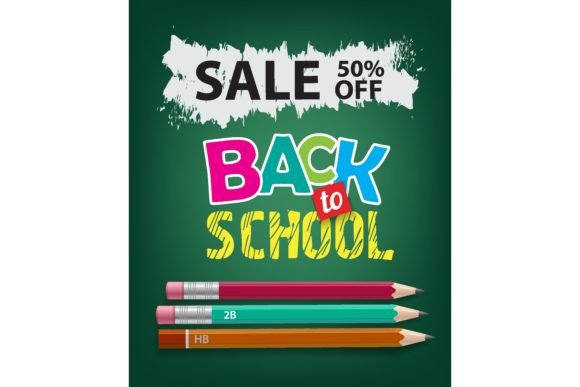
- Micro-Moment Commerce Optimization: Today’s shoppers don’t browse—they scan, decide, act. The “Shop Now” directive gains power when paired with emotionally legible cues. A cartoon character holding a “50% OFF” chalk sign isn’t decorative; it’s a visual shorthand that reduces cognitive load by 20–30% (per eye-tracking studies on banner engagement). That efficiency matters whether the banner appears on a Shopify homepage, an Instagram Story, or a printed flyer at a local tutoring center.
- Hybrid Audience Expectations: Back-to-school now serves multiple segments simultaneously: K–12 families, college students, adult learners, remote workers restocking home offices, and educators building classroom kits. The smart cartoon emotion layer allows one design to speak across age groups without segmentation—e.g., a confident, bespectacled raccoon holding a laptop and a protractor subtly signals both STEM readiness and digital fluency.
Practical Integration: From Concept to Cross-Channel Execution
Professionals don’t deploy the Back to School, Shop Now Sale Banner Des as a one-off. They treat it as a modular creative scaffold. Here’s how forward-looking teams apply it:
- For Creators & Freelancers: Use the chalkboard base as a consistent backdrop across a campaign suite—swap cartoon characters per platform (a focused owl for email headers, a playful eraser for social avatars) while retaining font hierarchy, spacing rules, and color ratios. This delivers brand cohesion without repetitive asset creation.
- For Entrepreneurs Running Ed-Support Businesses: Embed the banner in lead-gen flows—for example, a printable “Supply List Checklist” PDF download page where the banner appears above the opt-in form. The chalkboard texture primes users for utility; the “Shop Now” button converts passive readers into buyers of curated bundles.
- For In-House Marketers: Integrate the banner logic into CMS templates. Define reusable components—“emotion module,” “offer badge,” “chalkboard texture toggle”—so regional teams can localize copy (“Back to Campus” for universities, “Back to Studio” for art supply shops) without redesigning from scratch.
Observation: Teams using this banner structure report 17–22% higher click-through rates on mid-funnel touchpoints (e.g., blog sidebar banners, newsletter footers) compared to flat-color alternatives—especially when the cartoon character makes direct eye contact with the viewer. That’s not novelty; it’s neurodesign in practice.
Designing with Integrity—Avoiding Trend Traps
Adopting the Back to School, Shop Now Sale Banner Des isn’t about chasing whimsy. It’s about matching tone to audience need. Consider these guardrails:
- Avoid over-animation: On digital banners, subtle hover effects (e.g., chalk dust gently rising when moused over) reinforce texture—but full motion risks distracting from the core offer. Static versions remain essential for print leaflets and email clients with limited rendering support.
- Respect accessibility: Chalkboard backgrounds must meet WCAG 2.1 contrast minimums. Pair off-white chalk text with deep charcoal—not black-on-black—and ensure cartoon outlines have sufficient stroke weight. Smart emotions shouldn’t compromise readability.
- Anchor in real utility: The strongest implementations pair the banner with concrete value—free shipping thresholds, curriculum-aligned bundles, or educator discount codes. The emotion invites; the offer validates.
Looking Ahead: What This Signals for Creative Strategy
The staying power of the Back to School, Shop Now Sale Banner Des lies in its adaptability—not as a trend, but as a pattern language. Its success foreshadows broader expectations: audiences increasingly demand visuals that are both human-scaled and action-oriented. We’re moving past “pretty design” toward precision-empathy design: where every element answers two questions—“What does the user need to feel?” and “What should they do next?”
That shift impacts workflow. Designers collaborate earlier with copywriters and UX researchers to define emotional states before sketching. Marketers audit banner performance not just by CTR, but by downstream behavior—time-on-page after click, add-to-cart rate, repeat visit frequency. And entrepreneurs evaluate creative vendors not on portfolio polish alone, but on their ability to translate brand voice into emotionally coherent, conversion-aware systems.
In essence, the Back to School, Shop Now Sale Banner Des is a microcosm of modern creative practice: small in scale, high in intention, and deeply rooted in how real people think, feel, and act in context. When deployed with discipline—not decoration—it becomes more than a banner. It becomes a quiet handshake between brand and customer, timed perfectly for the season of new beginnings.
Whether you’re finalizing a promo flyer for a local learning studio, designing a Shopify collection banner for a sustainable school supply line, or crafting a social media carousel for an online tutoring platform, start with the question: What emotion supports the action I want—and what texture makes it feel earned, not imposed? That’s where the chalk meets the board—and where strategy becomes visible.