Back to School Free Design: A Strategic Resource for Educators, Creators, and Small Business Owners
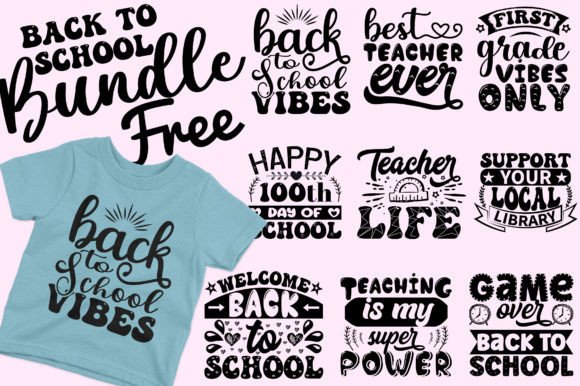
“Back to School Free Design” isn’t just a download—it’s a tactical asset. When selected with intention and applied with clarity, it supports real-world goals: launching seasonal campaigns, reinforcing brand consistency, streamlining classroom communications, or accelerating content production without sacrificing quality. Unlike generic clipart or overused templates, this particular Back to School Free Design delivers six professionally structured digital files—each optimized for distinct use cases across design, print, web, and fabrication workflows. Its value lies not in being “free,” but in its readiness, versatility, and technical integrity.
What You Actually Get—and Why Format Diversity Matters
The package includes one AI (Adobe Illustrator), one EPS, one SVG, one DXF, one JPG, and one PNG file—all sized to 1920px × 1280px. That’s not arbitrary. This resolution balances screen clarity and editing flexibility while fitting common presentation and social media dimensions. More importantly, the format mix reflects deliberate interoperability:
- AI and EPS preserve vector scalability—essential if you’re resizing for banners, signage, or branded merchandise;
- SVG enables seamless integration into websites, email headers, or interactive learning platforms without pixelation;
- DXF opens doors to laser cutting, CNC routing, or vinyl plotting—valuable for educators making tactile classroom tools or small businesses producing custom back-to-school merch;
- JPG and PNG offer immediate usability: JPG for email newsletters or printed handouts; PNG for overlays, social posts, or presentations where transparency matters.
This breadth means you’re not locked into one software ecosystem or output channel. You decide whether to refine the logo in Illustrator, embed it cleanly in a WordPress header via SVG, or cut it precisely from cardboard using DXF. That kind of flexibility saves time—not just in execution, but in decision-making downstream.
When Strategic Use Outweighs Convenience
A Back to School Free Design is most effective when aligned with a specific objective—not as decoration, but as infrastructure. Consider these grounded use cases:
- Educators building welcome packets, classroom rules posters, or parent newsletter headers can deploy the PNG or SVG directly—no design skills required—while maintaining visual cohesion across materials;
- Small business owners running tutoring centers, after-school programs, or school supply shops can adapt the AI file to add their logo, adjust colors to match existing branding, or repurpose elements into flyers, Google Ads, or Instagram story templates;
- Freelancers and marketers supporting multiple education-sector clients can keep this on hand as a foundational layer—speeding up mockups, reducing revision cycles, and ensuring seasonal relevance without starting from scratch each August.
Notice what’s absent from those examples: vague aspirations like “looking professional” or “being creative.” Instead, each scenario ties the Back to School Free Design to a measurable action—sending a newsletter, printing a banner, launching an ad campaign. That’s how utility becomes strategy.
What to Consider Before You Download—or Deploy
Free doesn’t mean frictionless. To use this resource well, ask three practical questions:
- Do I have the tools—and know-how—to open and edit these files? The ZIP delivery requires basic unzipping knowledge. AI and EPS files need Adobe Illustrator (or compatible vector editors like Affinity Designer). SVG works in most modern browsers and CMS platforms—but may require minor code tweaks in older systems. If you’re unfamiliar with vector formats, start with the PNG or JPG. Don’t assume competence; assess it.
- Does this align with my current visual identity—or will it dilute it? A bright, playful Back to School Free Design may clash with a high-school STEM program’s clean, data-driven aesthetic. Before inserting it into your materials, compare its color palette, typography cues, and tone against your existing brand guidelines—even informal ones. Minor edits (color swaps, cropping, layer adjustments) are possible, but only if you’ve budgeted time for them.
- Is this supporting a goal—or filling space? Slapping a back-to-school graphic onto a webpage without context won’t improve engagement. But pairing it with clear messaging—“Enroll by August 15 for early-bird tutoring rates”—turns design into a conversion tool. Let function guide form, not the other way around.
Ignoring these considerations risks wasted effort: hours spent wrestling with unfamiliar file types, mismatched visuals confusing your audience, or generic imagery undermining credibility. Intentionality separates useful assets from decorative clutter.
Risks of Using Back to School Free Design Without Context
There’s a quiet risk in treating any free design as universally appropriate: homogenization. When dozens of tutoring services, school PTA groups, and local bookstores all use the same Back to School Free Design—unchanged—their materials begin to blur together. Your audience stops seeing *you*. They see “another back-to-school thing.”
That’s why customization matters—not for perfection, but for distinction. Even small shifts—a modified accent color matching your school’s mascot, swapping the default font for one used in your official letterhead, or cropping the composition to highlight a specific call-to-action—signal care and continuity. It tells stakeholders: “This wasn’t grabbed and dropped. It was chosen and shaped for *this* purpose, *this* audience, *this* moment.”
Also consider longevity. A highly stylized, trend-dependent Back to School Free Design may feel dated by October. Look instead for clean lines, balanced negative space, and adaptable iconography—qualities that support reuse beyond a single season.
Practical Tips for Long-Term Value
Maximize return on this resource with these actionable steps:
- Store it thoughtfully. Save the unzipped files in a clearly labeled folder (e.g., “BackToSchool_Resources/Designs/2024_FreePack”) alongside notes on usage rights, modification history, and compatible software versions.
- Document your adaptations. If you change colors or add text in Illustrator, save a new version with “_edited” in the filename. Future-you will thank present-you when updating next year’s materials.
- Test across outputs. Preview the SVG on your mobile site, print the JPG at actual size, and open the DXF in your cutting software’s simulator. Assumptions about compatibility often break at the final step.
- Pair it with copy strategy. A strong Back to School Free Design amplifies messaging—it doesn’t replace it. Draft your headline and subhead first, then place the graphic to serve them—not the reverse.
Ultimately, this Back to School Free Design earns its place in your workflow not because it’s free, but because it reduces cognitive load at critical moments: when enrollment deadlines loom, when parent communication windows narrow, or when you need to ship polished assets fast—without compromising clarity or credibility.
Final Thought: Design as Decision-Making Infrastructure
Treat every design asset—including this Back to School Free Design—as part of your operational infrastructure. Like reliable software, consistent templates, or documented processes, it exists to make better decisions faster: which message to lead with, how to allocate limited creative time, where to reinforce trust visually. Its highest use isn’t in isolation, but in service of outcomes—clearer communication, stronger positioning, smoother execution. That’s the quiet power of choosing well, editing intentionally, and applying strategically.