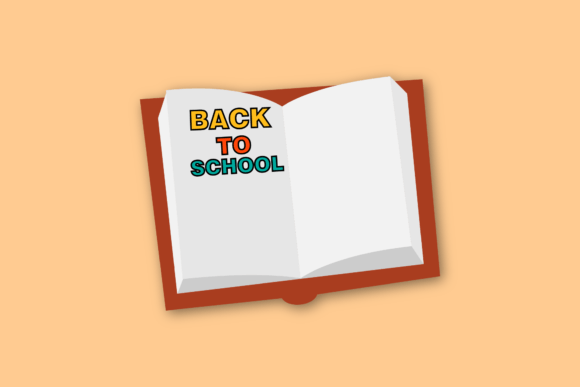
Back to School Book Design for Creative Professionals
Whether you're designing classroom resources, launching an educational blog, or preparing branded materials for a tutoring business, a well-crafted Back to School Book Design can serve as both a functional tool and a visual anchor. It’s more than seasonal decoration—it’s a practical asset that supports clarity, consistency, and engagement across learning environments and promotional efforts.
Why This Design Fits Real Workflows
This Back to School Book Design arrives as six digital files—AI, EPS, SVG, DXF, JPG, and PNG—all built on a 1920px × 1280px canvas. That size isn’t arbitrary: it scales cleanly for social media banners, printable handouts, presentation slides, and even large-format classroom posters. The inclusion of vector formats (AI, EPS, SVG, DXF) means you can resize without pixelation—ideal when adapting the same design for a website header, a student workbook cover, or vinyl-cut signage for your learning center.
The JPG and PNG files offer immediate usability. Drop the PNG into Canva for quick social posts or use the JPG in email newsletters—no editing required. Meanwhile, designers with Adobe Illustrator or Affinity Designer can open the AI or EPS file to adjust colors, rearrange elements, or integrate custom typography. SVG works natively in web projects; DXF supports laser cutting or CNC workflows if you’re producing physical learning tools like flashcards or desk organizers.
Who Benefits—and How
Educators and curriculum developers often juggle tight timelines before term starts. Instead of building book covers or reading logs from scratch, this Back to School Book Design provides a polished foundation. Swap out placeholder text, add grade-level icons, or layer in school branding—all within minutes. One middle school literacy coach used the SVG version to generate editable PDFs for each student’s personalized reading journal, saving over three hours per week during August prep.
Freelance designers and small creative studios find value in having versatile, rights-cleared assets ready for client work. If a local tutoring service asks for branded “Back to School” printables, this design delivers multiple format options—no need to license stock or re-create layouts. The vector files let you match brand palettes precisely, while the high-res raster files ensure crisp output for printed flyers or digital ads.
Bloggers, content creators, and edtech marketers rely on cohesive visuals to build trust and recognition. Using this Back to School Book Design across Pinterest pins, Instagram carousels, and downloadable lead magnets creates visual continuity—helping audiences instantly associate your content with thoughtful, classroom-ready resources. A homeschool influencer reported a 22% increase in PDF download conversions after switching from generic templates to this consistent, professional-looking design system.
Practical Considerations Before You Use It
This Back to School Book Design is delivered in a ZIP file. You’ll need basic file extraction skills—standard on Windows (via built-in compression tools) and macOS (double-clicking the archive). No special software is required just to view or use the JPG and PNG files. However, editing the AI, EPS, or SVG versions does require compatible applications: Adobe Illustrator, CorelDRAW, Inkscape (free), or Affinity Designer are all viable options. If you only use Canva or Google Slides, stick with the PNG or JPG for drag-and-drop use—but know that fine-tuning color, spacing, or typography won’t be possible there.
The design is intentionally clean and adaptable—not overly themed with cartoon characters or rigid grade-specific motifs. That makes it suitable for upper elementary through adult education contexts, but less ideal if you specifically need kindergarten-level whimsy or high-school STEM-focused iconography. For those cases, consider pairing this base layout with supplemental graphics rather than expecting full customization within the file itself.
How It Supports Better Outcomes—Without Overpromising
Time savings come not from magic, but from eliminating redundant steps. Instead of sourcing fonts, aligning margins, balancing color contrast, and testing print-safe resolution—all decisions already resolved in this design—you focus energy where it matters most: tailoring content to your audience’s needs. A university writing center repurposed the AI file to create a series of discipline-specific “Back to School” handouts (e.g., “Research Skills for History Majors”), changing only headers and examples—keeping visual coherence while deepening relevance.
Consistency strengthens communication. When students see the same visual language across a syllabus, a digital workbook, and a classroom poster, cognitive load decreases. That subtle alignment supports comprehension and retention—not because the design is flashy, but because it’s predictable and intentional. That’s the quiet strength of a thoughtfully built Back to School Book Design.
A Note on Collaboration and Sharing
If you’re working with a team—say, a district curriculum team or a co-authoring partnership—the multi-format delivery streamlines collaboration. Share the AI file with your lead designer, export PNGs for the communications officer to post on social, and send the SVG to your web developer for embedding. No version confusion. No “Can you resend that in JPEG?” delays. Everyone accesses what they need, in the format that fits their role.
That said, this is a single-design package—not a full template suite. It doesn’t include alternate color schemes, layered PSD mockups, or editable Google Docs versions. If your project demands dozens of variations or extensive typographic control beyond what vector paths allow, you may want to supplement with additional assets—or commission custom adaptations.
Final Thought: Design as Infrastructure
Treating graphic assets like infrastructure—reliable, reusable, and purpose-built—changes how efficiently you operate. This Back to School Book Design functions like that: not a one-off flourish, but a working component in your creative toolkit. It respects your time, supports your goals, and adapts quietly to different platforms and audiences. And because it’s delivered with clear format guidance and realistic usage notes, there’s little guesswork involved—just straightforward utility.
Thank you for visiting my product. Have a nice time—I hope you like my graphic design. Don’t forget to follow my account for more practical, classroom- and creator-friendly resources.